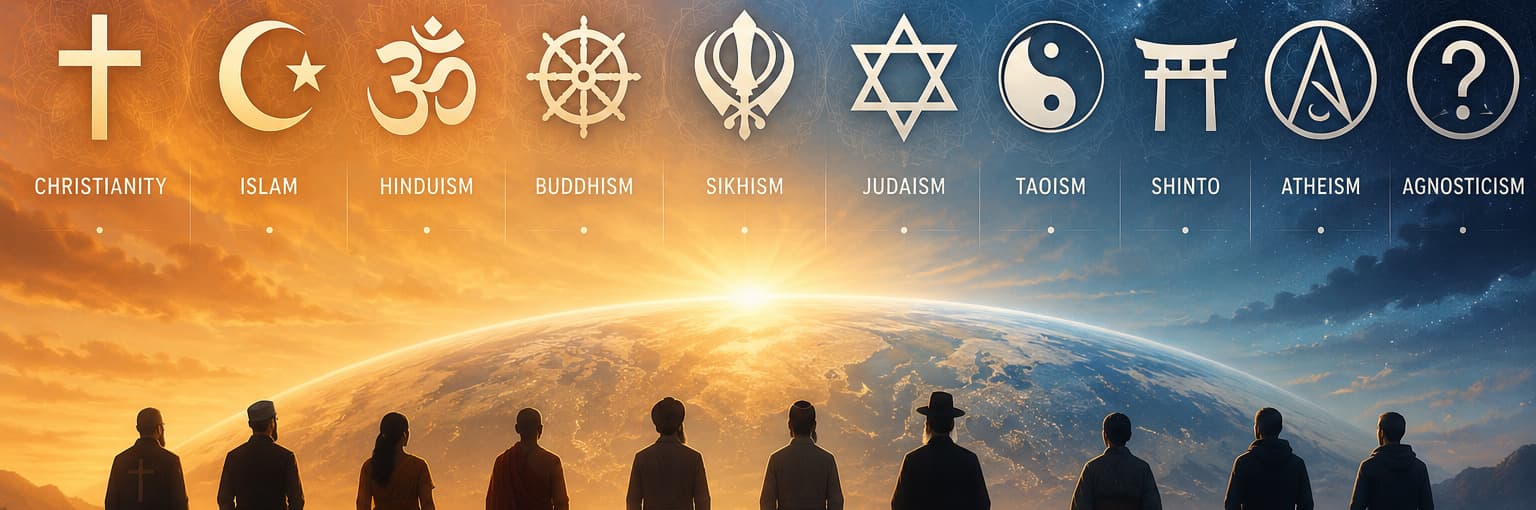

In the previous two articles I shed some light on the Hindu and Islam faiths. With Easter on the horizon, we look at the key beliefs of Christianity, as the world’s largest religious group prepares for what is considered the most important event on the global Christian calendar.
The celebration of Easter commemorates the belief that Jesus Christ rose from the dead after his execution. It represents the culmination of the central message of Christianity: the death and resurrection of Jesus as the foundation of salvation and hope for eternal life.
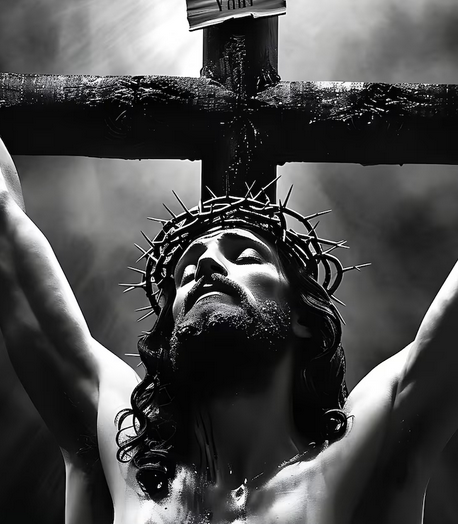
The origins of Easter lie in the events described in the New Testament of the Bible. According to Christian tradition, Jesus was arrested, tried, and executed by crucifixion under Roman authority in Jerusalem around 30–33 CE. This event is remembered on Good Friday (tomorrow 3 April 2026), which marks the day of Jesus’ death.
Who was Jesus?
Jesus was a Jewish religious teacher and preacher who lived in the early 1st century CE in the Roman province of Judea (modern-day Israel and Palestine). When he was about thirty, he began a public ministry.
Theologically, Easter represents victory over sin and death. Christians believe that Jesus’ death and resurrection reconciled humanity with God. The crucifixion is interpreted as a sacrificial act through which Jesus took upon himself the consequences of human sin, while the resurrection demonstrates divine power over death.
Easter is also closely tied to several other important observances in the Christian calendar. It concludes Lent, a 40-day period of fasting, prayer, and reflection meant to prepare believers spiritually for the celebration. This week leading up to Easter, known as Holy Week, includes commemorations such as Palm Sunday, Maundy Thursday (Holy Thursday, the Christian holiday commemorating the Last Supper, where Jesus instituted the Eucharist and washed his disciples' feet to demonstrate humility and service), and Good Friday.
The Origins, Evolution, and Diversity of Christianity
The earliest Christian communities were composed almost entirely of Jews who believed that Jesus was the promised Messiah. One of the most influential figures in spreading the new faith beyond Jewish communities was Paul the Apostle.
During this early period, Christian beliefs and writings gradually took shape. Texts such as the four Gospels and letters attributed to Paul circulated among communities and were eventually collected into what became the New Testament.
Early Development and Institutionalization
For its first three centuries, Christianity existed largely as a minority religion within the Roman Empire. A major turning point occurred in the fourth century when Roman Emperor Constantine legalized Christianity 313 CE. Later in the century, the emperor Theodosius I, declared Christianity the official religion of the empire. This shift transformed Christianity from a persecuted minority movement into a central institution within imperial society.
As Christianity expanded, church leaders gathered in councils to clarify doctrine and settle disputes. One of the most important was the First Council of Nicaea, which addressed debates about the nature of Christ and produced the Nicene Creed, a statement of core Christian beliefs that remains influential today.
Major Divisions in Christianity
Over time, Christianity experienced major divisions that produced the different branches known today. The first major split occurred in 1054 in an event known as the Great Schism. The split was caused by a combination of theological disagreements, cultural differences, and political tensions between the Latin-speaking West and the Greek-speaking East.
The second major division occurred in the sixteenth century during the Protestant Reformation. Reformers such as Martin Luther criticized practices within the Roman Catholic Church, including the sale of indulgences and the central authority of the papacy. Luther argued that salvation came through faith alone and that the Bible should be the primary authority for Christian teaching.
The Reformation led to the creation of Protestant churches separate from Roman Catholicism. Over time, Protestantism diversified into many denominations including Lutheran, Reformed, Anglican, Baptist, Methodist, and Pentecostal traditions.
Christianity in Cape Town
Based on 2016 data, the largest Christian grouping in the Western Cape is the Pentecostal/Evangelistic denomination, accounting for roughly 19.6% of the province's Christian population. Other major, fast-growing groups include African Independent Churches (16.0%) and Reformed Churches (12.4%).
Within this context, the three largest Christian denominations/traditions are generally considered to be the Dutch Reformed Churches (NG Kerk), the Roman Catholic Church, and the Anglican Church of Southern Africa.
While these are the largest traditional denominations, the Western Cape has a highly diverse religious landscape that includes a high concentration of Pentecostal/Charismatic churches (such as the Apostolic Faith Mission) and a strong historical Moravian Church presence
While Pentecostalism is the fastest-growing movement, historical mainstream churches like the Catholic, Anglican, and Dutch Reformed churches also have significant, though declining, followings in the region.
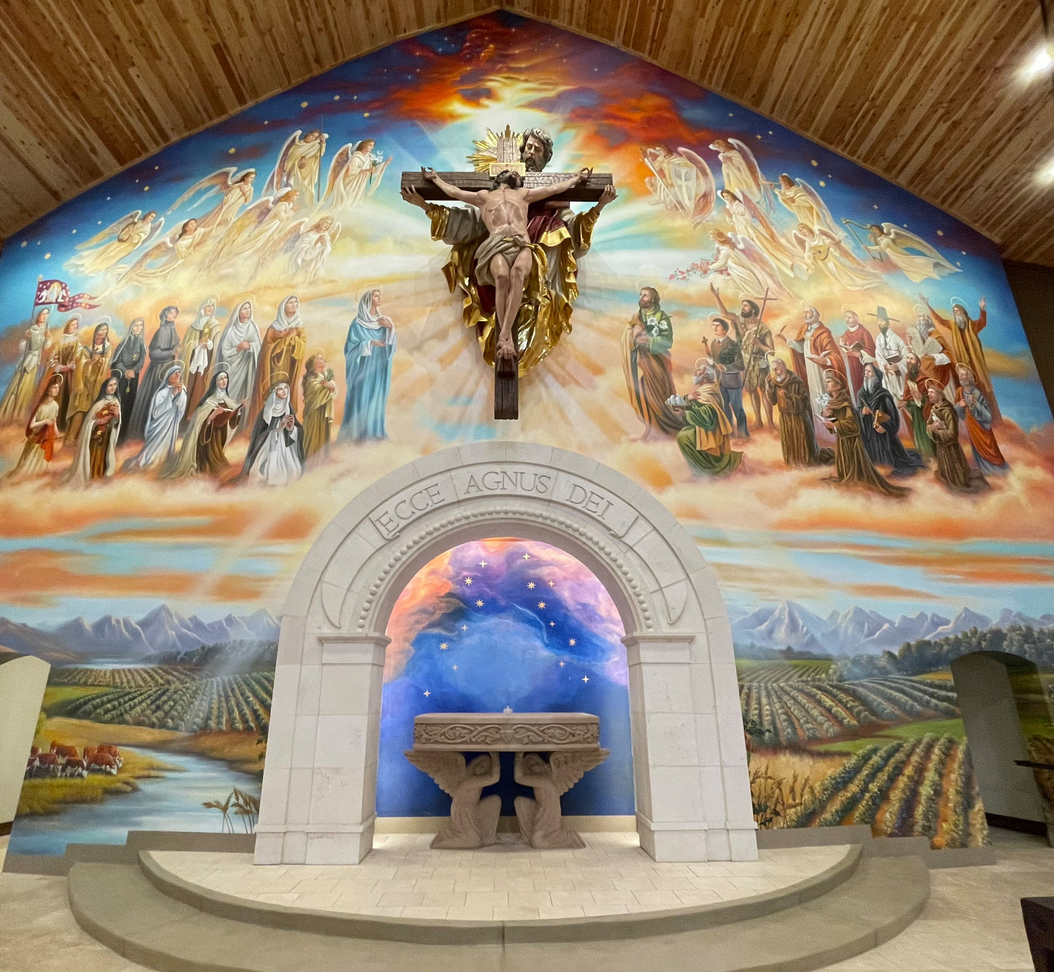
Why so many denominations?
The large number of Christian denominations—often estimated in the thousands—arose for several reasons. First, theological disagreements have played a significant role. Christians have differed on doctrines such as the nature of salvation, the role of the church, baptism practices, and interpretations of the Bible.
Second, authority structures have been a major source of division. Some traditions emphasize centralized leadership (such as the papacy in Catholicism), while others stress local congregational autonomy.
Third, cultural and historical contexts have shaped the development of churches. As Christianity spread across Europe, Africa, Asia, and the Americas, it interacted with different cultures and political systems, leading to distinct traditions and practices.
Finally, reform movements within Christianity have repeatedly attempted to return to what followers considered the “original” teachings of the faith. These reform efforts often resulted in new denominations.
Key Tenets of Christianity
Despite the diversity of denominations, most Christians share several core beliefs.
First is belief in one God who is understood as a Trinity: Father, Son, and Holy Spirit. This concept holds that God exists as three persons but one divine essence.
Second is the belief that Jesus Christ is the Son of God and the saviour of humanity. Third is the authority of the Bible as sacred scripture. While interpretations differ, the Old and New Testaments form the central textual foundation for Christian teaching. Fourth is the emphasis on salvation, typically understood as forgiveness of sin and the promise of eternal life through faith in Christ.
Lastly, Christian ethics emphasize love of neighbour, compassion, forgiveness, humility, and moral transformation. Many of these teachings are drawn from Jesus’ sermons, particularly the ethical instructions found in the Gospels.
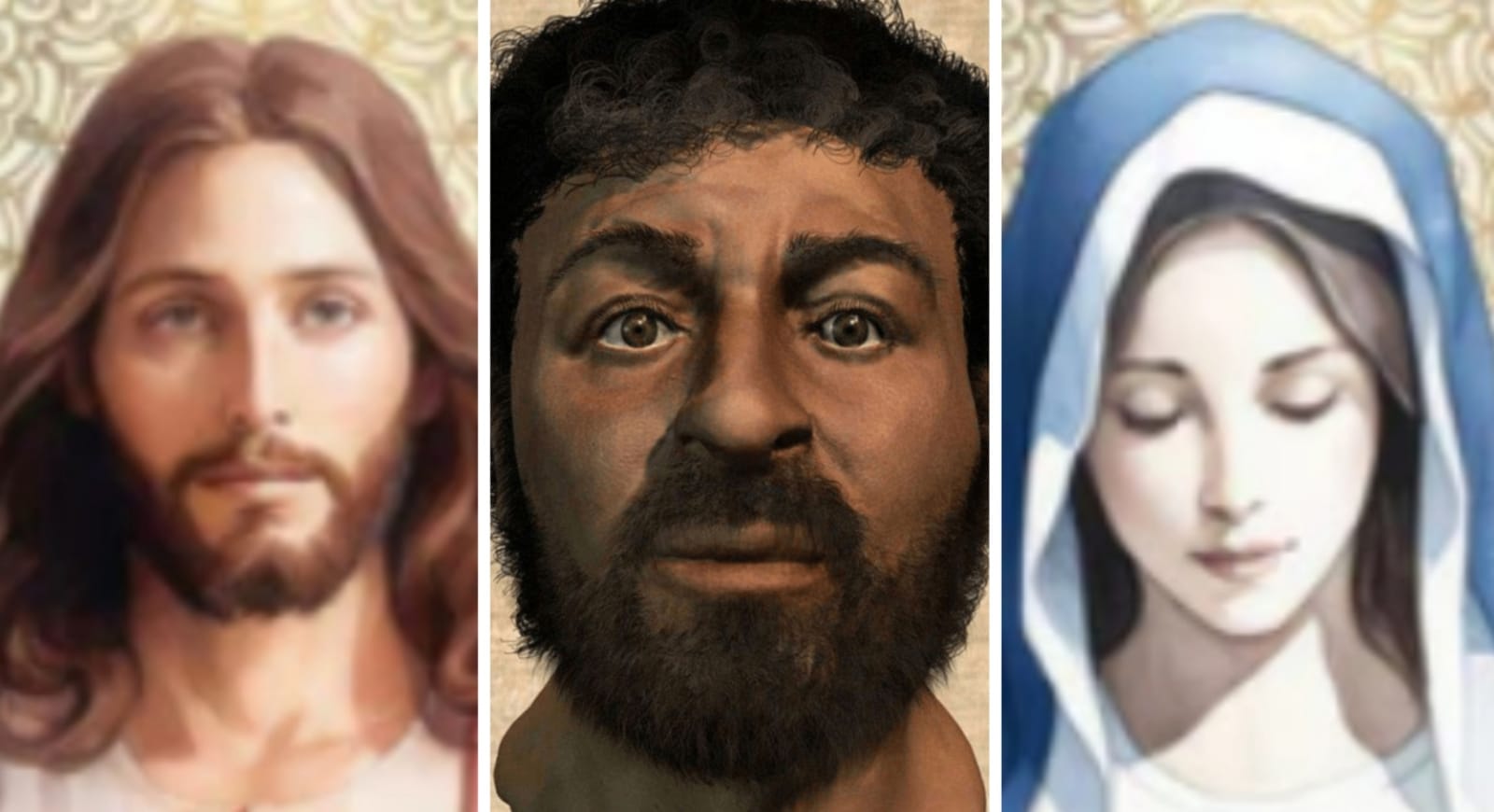
The digitally reconstructed face of Jesus (centre)
Worshipping idols and images
Some Christian denominations reject the use of images of Jesus Christ, Mary, mother of Jesus, and the saints because of theological concerns about idolatry. One of the main reasons some Christians reject religious images comes from the Ten Commandments in the Old Testament. In the Book of Exodus, believers are commanded not to make or worship “graven images.”
For denominations that take this commandment very strictly, statues, paintings, and icons of holy figures can appear dangerously close to idol worship. They fear that believers might begin to venerate the object itself rather than God.
The Catholic Church and the Eastern Orthodox Church do not believe they are worshipping images themselves. Instead, they distinguish between worship (which is reserved for God alone) and veneration (honour or respect shown to saints).
The disagreement about religious images comes down to different interpretations of scripture and worship. Despite these differences, most Christian traditions agree on the central focus of worship: devotion to God and faith in Jesus Christ.
The common western European images of Jesus and his mother as similar to what white Europeans look like, is also considered problematic by many Christians because these depictions do not accurately reflect what typical Palestinian people look like and would have looked like during the time of Jesus.
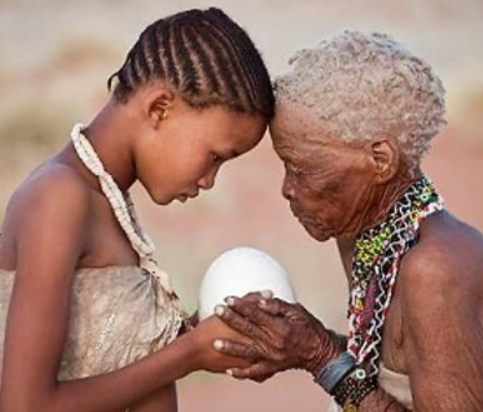
African Religious Traditions
The spiritual beliefs of the Khoisan—a collective term for the San (hunter-gatherers) and Khoekhoe (pastoralists) of Southern Africa present in the Western Cape before the arrival of Europeans—are deeply animistic (the belief that natural objects, phenomena, and the universe possess souls, spirits, or conscious life), focusing on the connection between the human, natural, and spiritual worlds. Their beliefs are not a single codified religion but a diverse set of traditions, myths, and rituals that emphasize transformation, trance states, and a profound relationship with nature.
Before the arrival of Europeans, Africa had a rich and diverse range of religious and spiritual traditions. Rather than a single unified religion, the continent was home to thousands of local belief systems that differed by region, ethnic group, and culture. These systems are often collectively referred to as African Traditional Religions (ATR), although that term describes a broad family of beliefs rather than a single organized religion.
Indigenous African Belief Systems
Most traditional African belief systems shared several common features. They generally believed in a supreme creator God, along with a world populated by spirits, ancestors, and spiritual forces that influence everyday life. Across many African societies, ancestor veneration was central. The spirits of deceased family members were believed to remain active in the spiritual world and capable of influencing the living. Honouring ancestors through rituals, offerings, and remembrance was seen as maintaining harmony between the physical and spiritual realms.
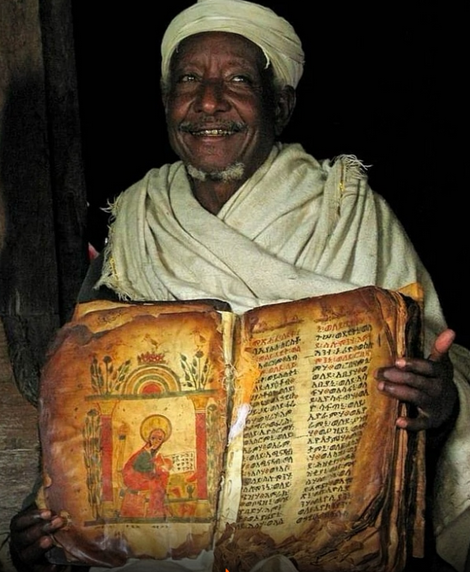
The Ethiopian Orthodox Tewahedo Church Bible is one of the world's oldest and most complete, containing 81–88 books, including texts like Enoch and Jubilees. Written in Ge'ez, it is older than the King James Version and contains more books than the 66-book Protestant canon. It includes both canonical and apocryphal books.
Religion before Christianity
Human religious belief predates written history, making it impossible to fully reconstruct the earliest belief systems. However, archaeology, anthropology, and ancient texts provide strong evidence that humans have practiced forms of religion for tens of thousands of years. These early systems usually involved beliefs in spirits, nature powers, ancestors, and later structured pantheons of Gods. Across the ancient world, many civilizations developed complex religious traditions long before the rise of Christianity.
Prehistoric Spiritual Beliefs
The earliest evidence of religious thought appears in prehistoric burial practices dating back at least 100,000 years. Archaeologists have found graves containing tools, ornaments, and food offerings, suggesting early humans believed in some form of afterlife or spiritual existence beyond death.
Many scholars think early religion was animistic, a belief that spirits inhabit natural objects and forces such as rivers, mountains, animals, and storms. This worldview treated the natural environment as spiritually alive and required rituals to maintain harmony between humans and these spiritual forces.
Prehistoric cave paintings, ritual objects, and figurines, such as fertility statues, suggest that early humans may have worshipped spirits related to fertility, hunting success, and survival.
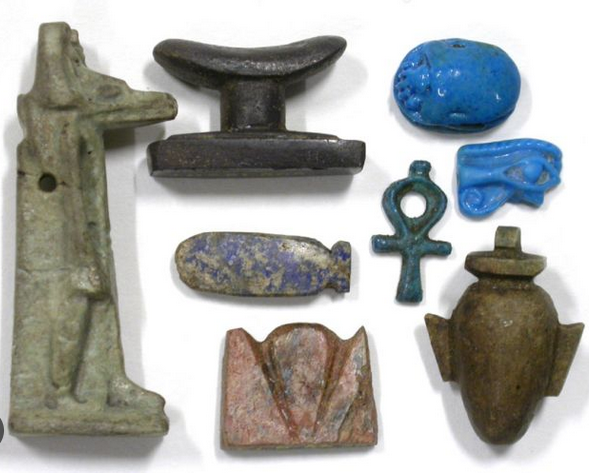
Ancient Mesopotamian Religion
One of the earliest documented religious systems developed in Mesopotamia (modern day Iraq), where civilizations such as the Sumerians, Akkadians, Babylonians, and Assyrians flourished. Mesopotamian religion was polytheistic, meaning people worshipped many Gods. These Gods were believed to control natural forces and human destiny. Among the most important deities were: Anu, the God of the heavens and one of the highest deities. Enlil, associated with air, storms, and authority. Inanna, a powerful Goddess connected with fertility and political power. Temples called ziggurats served as centres of worship where priests conducted rituals to honour the Gods and maintain cosmic order.
Have a happy Easter.
The content above has been edited from accredited sources supplied by online search engines. You are encouraged to delve deeper into to any of the topics raised in this article by conducting your own searches, being careful to ensure that any online entries have been authentically referenced.